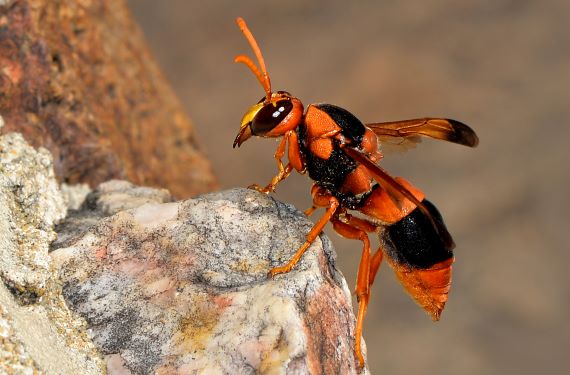
Australia’s ecosystem has a wide range of creatures, but only some warn us to be careful, like wasps and especially the Australian Hornet. These sizable buzzing insects, despite their name, aren’t true hornets, but rather a type of potter wasp. While their impressive size and the sting can be terrifying, understanding their behaviour can help you navigate encounters safely. Australian hornets are solitary wasps, meaning they’re not generally aggressive unless their nest is threatened. So, make sure to avoid disturbing their nests, and you’ll likely have a peaceful coexistence. In today’s blog, let us tell you how to identify them and react in their presence.
Recognising the Australian Hornet
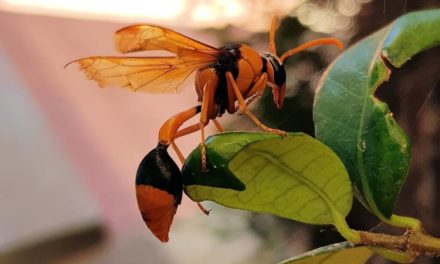
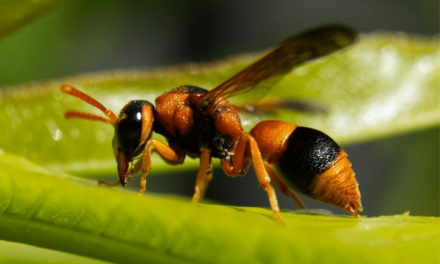
The Australian hornet, also known as the mud wasp, is a striking insect. Growing up to 3 centimeters long, they have a bold black and yellow striped body with a distinctive body. Unlike their smaller wasp cousins, these lack a waist connecting their thorax and abdomen. So, you need to look for their colour and the absence of a long and thin waist for quick identification.
Australian Hornets are a potential threat, but the level of danger depends on the situation.
Stings -Their main threat is their sting. While not the most venomous wasp, their sting can be very painful and trigger severe allergic reactions in some people. If you’re allergic, a sting can be life-threatening.
Behaviour – They are generally not aggressive unless their nest is disturbed. Unlike honeybees, they can sting repeatedly.
Overall Threat – For most people, they’re more of a nuisance than a threat. However, caution is advised especially if you have allergies.
How To React To An Australian Hornet?
Encountering an Australian hornet can be scary, but staying calm is important in this situation.
Sudden movements or swatting can be perceived as a threat, making them sting. So, resist the urge to swat or panic. If the hornet is near you, gradually move in the opposite direction without making loud noises. When the hornet shows aggression and makes you feel unsafe, calmly move indoors or hide behind a barrier for protection from their painful stings.
If you are allergic to stings or have a nest near your home, consider our professional pest control. Our wasp removal team will arrive at your home, inspect the areas, and provide quick and efficient treatments to remove them.
Hornets in Australia: What Makes Them Unique?
When discussing hornets in Australia, it’s important to note that while we use the term colloquially, true hornets (like those found in Europe or Asia) don’t naturally occur here. Instead, our “hornets” — such as the Australian hornet—are a type of solitary wasp. Their behaviour, lifecycle, and nesting habits differ significantly from their more aggressive overseas counterparts. Unlike social wasps that live in large colonies and aggressively defend their hives, these native wasps prefer to work alone and generally avoid conflict unless provoked. Understanding this distinction is key to knowing when they’re likely to pose a risk and when they’re simply part of nature’s pest control team, feeding on spiders and insects in your garden.
Australian Hornets play a valuable role in the ecosystem, preying on spiders and insects. However, when they become a threat and you feel uncomfortable managing it yourself, contact Enviro Safe Pest Control at 1300 997 272 today. We also provide bee removal, wasp nest removal Melbourne, termite inspections, termite treatment, rat removal, possum removal, ant control, and much more.